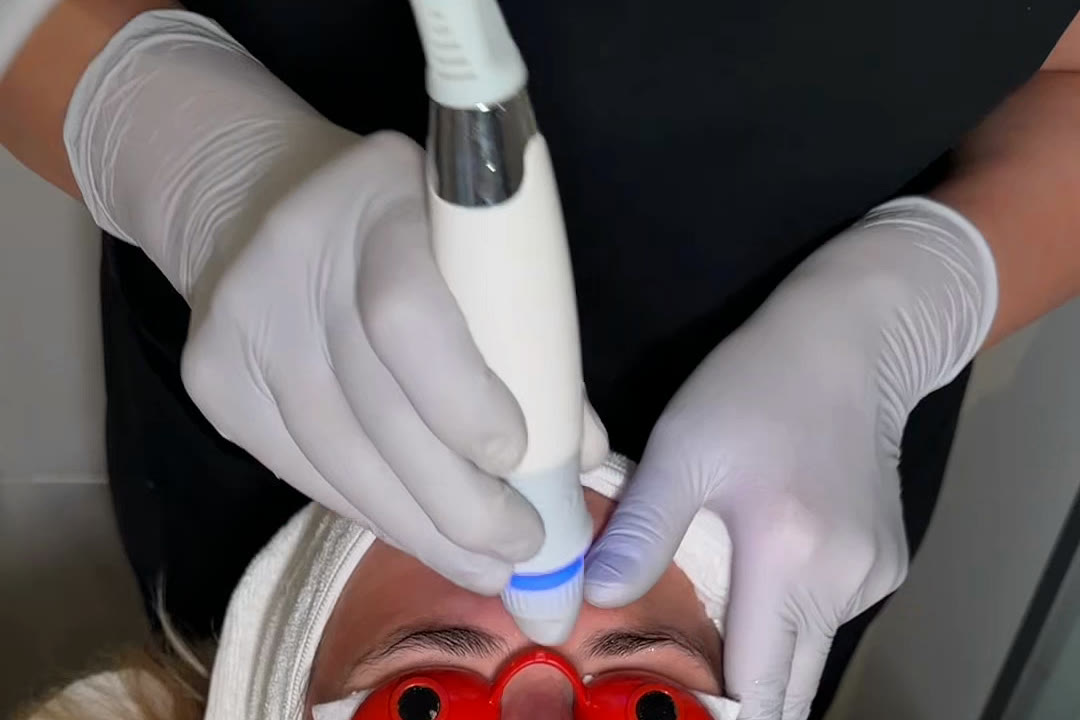
Hydradermabrasion Facial vs. Microdermabrasion: Which Is Right for You?
How a hydradermabrasion facial (such as the HydraFacial® brand) compares with microdermabrasion for congestion, texture, dryness and sensitive skin, from ROW 89 on the Upper East Side.
89
By ROW 89 Team
· 4 min read · Updated November 11, 2026
Hydradermabrasion facials and microdermabrasion both aim at smoother, brighter skin, but they work in different ways and suit different skin. Hydradermabrasion cleans pores with suction and adds hydration; microdermabrasion buffs the surface. This guide explains the difference.
A note on names: HydraFacial® is a registered trademark of its owner and one well-known brand of hydradermabrasion device. In this article we use “hydradermabrasion facial” for the general category. ROW 89 does not claim to offer the HydraFacial® branded treatment; our hydrating options are described below.
What is a hydradermabrasion facial?
A hydradermabrasion facial combines cleansing, gentle exfoliation and suction-based extraction with the infusion of hydrating serums, usually in one handheld device. HydraFacial is one brand of hydradermabrasion device; others work on a similar principle. A typical treatment follows three steps:
Cleanse and exfoliate to loosen dead skin and surface buildup.
Extract using gentle suction to lift debris from pores.
Hydrate by infusing serums into the skin.
Often chosen for: congested pores, blackheads, dehydration, dullness and light texture. It is generally gentle, with little or no downtime.
What is microdermabrasion?
Microdermabrasion is mechanical exfoliation, using a diamond-tipped wand or fine crystals to buff away the outermost layer of dead skin cells. It smooths the surface and can help skin look brighter and more even.
Often chosen for: rough texture, dullness, uneven tone and shallow marks. It is not done on active, inflamed breakouts.
Key differences
Hydradermabrasion facial
Microdermabrasion
How it works
Exfoliation, suction extraction and serum infusion
Mechanical buffing of the surface
Main benefit
Clean pores and hydration
Smoother texture
Feel
Gentle, cooling
Light scratching or sanding sensation
Active breakouts
Sometimes suitable; ask your esthetician
Not recommended
Sensitive skin
Usually better tolerated
Can irritate rosacea, eczema or thin skin
Downtime
Little or none
Possible mild redness for a day
Which is better for your skin?
Acne-prone or congested skin
A hydradermabrasion-style treatment is usually the gentler choice, since it clears pores without abrasion. Microdermabrasion should wait until inflamed breakouts have calmed. For ongoing acne, a structured plan such as our Clear Skin Acne Program is often more useful than any single facial.
Dark spots and uneven tone
Microdermabrasion, often alternated with chemical peels, tends to do more for tone and texture. Hydration-focused facials help skin look healthier but are not mainly designed for pigmentation.
Dry or dehydrated skin
Hydration-focused treatments win here. Microdermabrasion exfoliates but does not add hydration on its own.
Sensitive skin
Gentler, hydration-focused facials are usually better tolerated. Tell your esthetician about rosacea, eczema or recent reactions before any resurfacing treatment.
Hydration-focused facials are often booked every four to six weeks. Microdermabrasion is often done as a series every two to four weeks, then less often for maintenance. Your esthetician will suggest a rhythm based on how your skin responds.
This article is general information, not medical advice.
Come see us
From the Q at 86th Street and Second Avenue, it is about a five-minute walk to 219A East 89th Street, New York, NY 10128 (directions from the station). We are open 10am–8pm daily; call (212) 722-1959 or book online.