Why Fall and Winter Are Peel Season: Express vs. Glycolic vs. ASA Peels on the Upper East Side
ROW 89 Team • October 19, 2026 • 5 min read
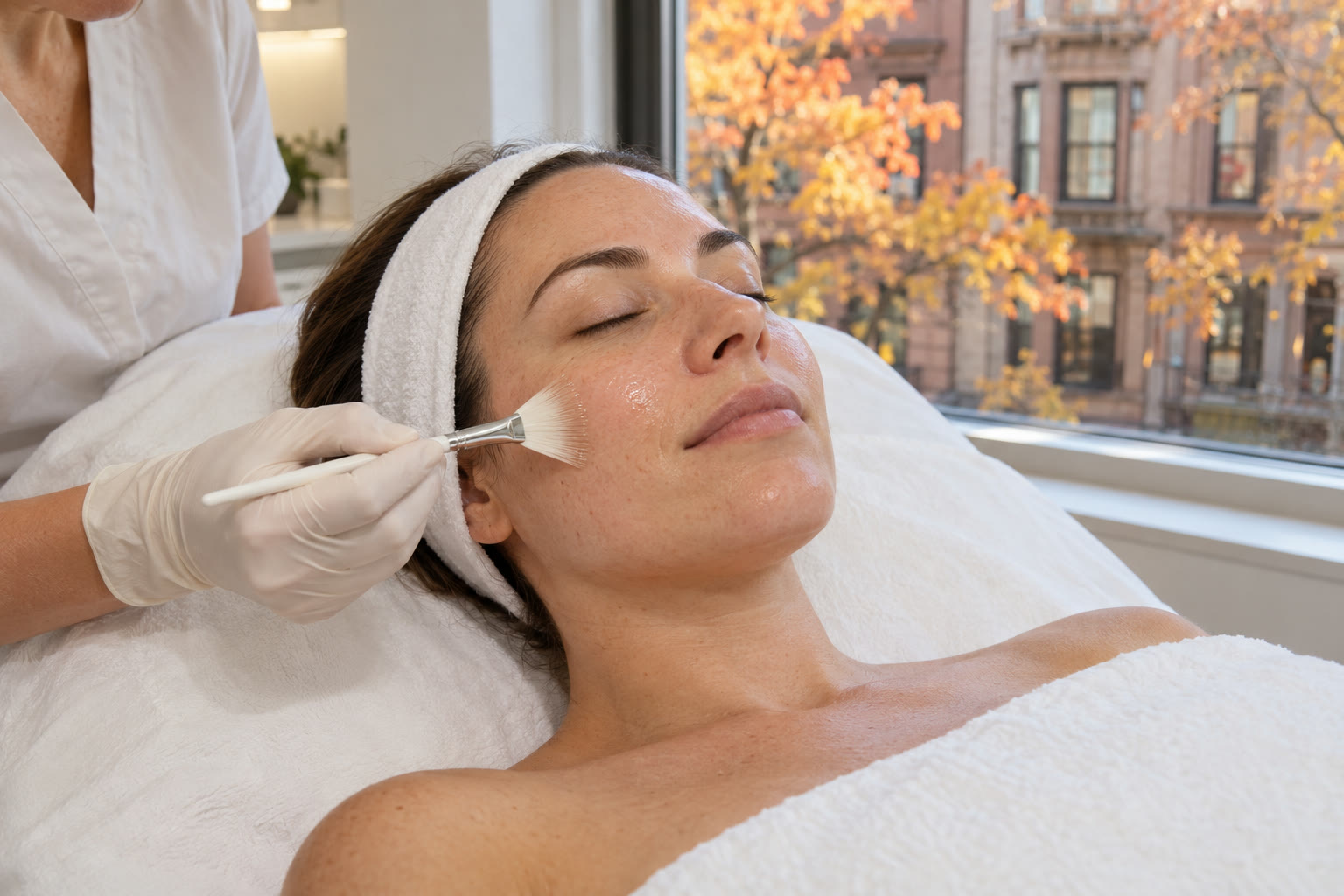
On the Upper East Side, summer means long weekends in the sun and walks along the East River and in Central Park. By the time the leaves turn on Museum Mile, many of us are left with dullness, rough texture and dark spots. That is why fall and winter are often called peel season: shorter days and less sun make it a practical time to exfoliate and brighten. This guide compares the three chemical peels on our menu at ROW 89 so you can choose the one that fits.
This article is general information, not medical advice. Your provider will advise you on what is appropriate for your skin and health history.
Why peels and fall go together
A chemical peel uses an acid solution to loosen dull surface cells so fresher skin shows through. Freshly peeled skin is more sensitive to the sun for a while, and sun exposure after a peel can make dark spots worse rather than better. In the cooler months, most people spend less time outdoors and are not planning beach trips, so it is easier to protect the skin while it recovers. Sunscreen is still essential every day, but there is less to work against.
Fall is also when summer’s effects show: uneven tone, a rougher feel and clogged pores after months of sunscreen, sweat and heat. A series of peels across the season can help skin look clearer and more even by the holidays.
Express vs. Glycolic vs. ASA: how they compare
| Peel | Price and time | Good for | Typical downtime |
|---|---|---|---|
| Express Peel | $89, 45 minutes | A first peel, quick brightening, a refresh before an event | Little to no visible peeling |
| Glycolic Peel 50% | $109, 60 minutes | Dullness, rough texture, early fine lines | Redness and light flaking for a few days |
| ASA Peel | $139, 60 minutes | More visible concerns such as uneven tone and texture | Redness and flaking for several days |
Express Peel
The Express Peel is the gentlest option and the easiest place to start. It suits people who are new to peels, short on time, or want a brighter look without visible peeling. Because there is little downtime, it can be booked about a week before an event.
Glycolic Peel 50%
Glycolic acid is one of the most widely used peeling agents. At ROW 89, the Glycolic Peel 50% is often chosen for skin that looks dull or feels rough, and for early fine lines. Expect some redness and light flaking for a few days afterward, and plan it at least two weeks before an important event.
ASA Peel
The ASA Peel is the strongest of the three. Your esthetician will check whether your skin is ready for it, and many clients start with the Express or Glycolic peel first. Downtime is longer, so it fits best into a quieter week.
How often to book
Peels usually work best as a series. Many clients book them two to four weeks apart through the fall and winter, depending on the peel and how their skin responds. Your esthetician will suggest a schedule and may alternate peels with facials. A typical plan might be an Express Peel in October, a Glycolic Peel in November and another in December, finishing before holiday parties.
Peels for breakouts
If your main concern is acne rather than dullness, a single peel is rarely the whole answer. Our Clear Skin Acne Program ($795) pairs three acne facials with three mandelic peels and LED light therapy, plus a home-care plan, and it starts with a free 15-minute consult with Rocio Romero, PA-C.
Who should wait
- Anyone with a sunburn, recent tanning or a beach trip in the last week or two.
- Anyone who is pregnant or breastfeeding: tell the team before booking.
- Anyone with an active cold sore, open skin, or a flare of eczema or rosacea on the face.
- Anyone who recently had waxing, laser or another resurfacing treatment on the face.
- Anyone using prescription skincare: mention it, as you may need to pause it before and after.
Frequently asked questions
Does a chemical peel hurt?
Most people feel tingling or warmth for a few minutes while the solution is on the skin. Your esthetician monitors your skin throughout and neutralizes or removes the peel as needed.
Will I visibly peel?
Not always. The Express Peel often shows little or no visible peeling. With the Glycolic and ASA peels, light flaking for a few days is common, usually around the nose and mouth.
Can I get a peel if I have darker skin?
Many peels can be used on a wide range of skin tones, but deeper skin can be more prone to dark marks after irritation. Your esthetician will choose the peel and timing carefully and may suggest starting with a lighter option.
Can I combine a peel with a facial?
Sometimes. Ask when you book; your esthetician will tell you which combinations suit your skin on the same day and which are better spaced apart.
Is a peel safe before a holiday party?
Yes, with the right timing: about a week before for the Express Peel and about two weeks before for the Glycolic or ASA peel.
Aftercare
- Use a gentle cleanser and a plain moisturizer for several days.
- Wear broad-spectrum sunscreen every day, even on gray days.
- Let flaking skin come off on its own. Do not pick, peel or scrub.
- Hold off on other exfoliants, scrubs and strong active products until your esthetician says it is fine.
- Skip saunas, hot yoga and intense workouts for a day or two.
For more, read our peel aftercare tips, compare microdermabrasion and chemical peels, or see how far ahead to book before a holiday party.
Visit ROW 89 on the Upper East Side
ROW 89 is at 219A East 89th Street, New York, NY 10128, between Second and Third Avenues in Yorkville, a short walk from Carnegie Hill and Lenox Hill and about five minutes from the Q at 86th Street (see directions from the 86th Street subway). One street entrance serves both floors: nails and lashes on the first floor, aesthetics on the second. We are open 10am–8pm every day. All three peels are listed on our chemical peels page. Call (212) 722-1959 or book online.