Why More Upper East Side Women Are Asking for Less Botox, Not More
ROW 89 Team • October 22, 2026 • 7 min read
By the third Zoom call of the morning, Maya had stopped following the budget update. She was watching the little self-view box in the corner of her screen, where two vertical lines had settled between her brows. The "11s." She wasn't annoyed. She was concentrating. On camera, it was hard to tell the difference.
Maya is 38, lives in Lenox Hill, and leads a team that mostly sees her through a laptop. She has wondered about Botox for a year. What stops her is a dinner last spring, when a close friend laughed at a story and her forehead stayed perfectly still. Her friend looked lovely. She also looked, Maya thought with a twinge of guilt, a little "done."
That night, coffee long cold and the kids finally asleep, she typed "baby Botox" into her phone and scrolled through dosing debates, price threads and horror stories. None of it answered her real question: could she soften the frown without losing the face her team, her kids and her friends know?
So she did something unglamorous. She opened her Notes app and started a list of questions to ask a medical provider, in person.
Maya is a composite of clients we hear from often; names and details are changed.
Maya's wish, softer but still recognizably herself, is where the Botox conversation is heading in 2026, on the Upper East Side and far beyond. Nicknames like "baby Botox" and "microdosing" are everywhere, and so is the fear of looking overdone.
Here's what those terms mean, what a lighter dose can and can't do, and what to ask first.
This article is general information, not medical advice. Botox, Dysport and Xeomin are prescription medicines. Talk with a licensed medical provider about whether any treatment is right for you, and tell them if you are pregnant, breastfeeding or have a neuromuscular condition.
Baby Botox in 2026: why "less" is the new ask
The American Society of Plastic Surgeons (ASPS) counted nearly 9.9 million neuromodulator procedures in 2024, more than any other minimally invasive treatment. When ASPS released its 2025 report on September 1, 2026, its president said today's patients are "increasingly seeking authentic restoration rather than transformation."
- Starting earlier, with less. Preventive Botox, nicknamed "prejuvenation," is having a moment. NPR reported in November 2025 that Botox has become increasingly popular with people in their 20s, and that clinics market "baby Botox" as a lower-dose option. NPR also cited ASPS data showing neurotoxin use grew more than 70% from 2019 to 2022 across all age groups under 70.
- Keeping some movement. PureWow, recapping a Wall Street Journal story on "strategic wrinkles," described people asking for softer dosing and more targeted placement, such as treating the 11s while leaving forehead lines alone.
- Skipping needles. "Notox," a catchall for needle-free alternatives, took off on social media in 2024, Cosmopolitan reported.
The frozen look has critics in medicine, too. A Miami plastic surgeon told NPR he turns away patients who want so much Botox that it would essentially freeze their face. "That looks terrible," he said.
And while 20-somethings get the headlines, ASPS found that adults 36 to 55 accounted for nearly half of all cosmetic procedures in 2025.
What "baby Botox" and "microdosing" really mean
Neither is an official medical or FDA term. Both are informal names for the same idea: smaller amounts of a neuromodulator, placed in targeted spots, so muscles soften rather than stop.
Botox is a brand of botulinum toxin type A; Dysport and Xeomin are others. As NPR explains, small amounts block the nerve signals to a muscle so it relaxes, temporarily softening wrinkles.
For reference, the FDA-approved label sets the standard Botox Cosmetic dose for frown lines at 20 units across five injection points. A "baby" plan aims lower, or treats only some of the muscles involved.
- Units don't translate between brands. The label says Botox Cosmetic units can't be compared to or converted into units of other botulinum toxin products.
- There's no standard "baby" dose. Ask exactly what a provider means: which product, how many units and where.
Who lighter Botox may suit, and what it can't do
A lighter approach may make sense if your lines show up mostly when you move (frowning, raising your brows, squinting), if you're new to injectables and want to start conservatively, or if you'd rather keep some expression even if a few lines remain.
In your 20s and thinking about prevention? NPR's reporting offers balance. A Houston plastic surgeon said young adults can show signs of aging, much of it down to genetics and sunscreen. A sociologist noted that once people start, they're unlikely to stop, and NPR pointed out the cost can add up to tens of thousands of dollars over your 20s and 30s. Daily sunscreen is the cheaper first step.
What a neuromodulator can't do:
- Replace lost volume. Relaxing a muscle doesn't fill a hollow; that's a job for tools like dermal fillers.
- Change skin texture or sun spots. That's where skin treatments like chemical peels or facials come in.
- Last forever. If you stop, NPR notes, the effects wear off and wrinkles reappear.
If a line shows even when your face is relaxed, ask whether a light dose alone can meet your goals.
The catch with a lighter dose: it may fade sooner
For frown lines, the Botox Cosmetic label says the effect typically begins one to two days after injection, builds over the first week, and lasts approximately three to four months. The American Academy of Dermatology (AAD) also says about 3 to 4 months, sometimes longer.
Dose matters, too. A 2021 review in Toxins found that higher doses for frown lines were associated with longer-lasting results. In one study of 226 women, doubling Botox's 20-unit label dose stretched the median duration of response to about 24 weeks, versus about 20 weeks at the standard dose.
The flip side: a deliberately lighter dose may wear off sooner, so you might plan touch-ups more often. If a family wedding or a gala on Museum Mile is coming up, ask about timing well ahead.
Botox side effects and safety: the unglamorous questions
- An FDA-approved product. Botox Cosmetic is approved for adults to temporarily improve frown lines, crow's feet, forehead lines and vertical neck bands. Dysport is approved for frown lines in adults under 65, and Xeomin for frown lines, forehead lines and crow's feet in adults.
- Adults only. The Medication Guide says Botox Cosmetic is not recommended for anyone younger than 18.
- A licensed medical provider. In 2024, the FDA warned that counterfeit Botox, apparently bought from unlicensed sources, had been found in multiple states, with adverse events including hospitalizations. It advises asking whether your provider is licensed and trained to administer the product, and confirming it comes from an authorized source.
Most side effects are mild and temporary. The AAD lists swelling, redness, soreness and bruising (about a week), plus mild headache (uncommon) and a temporarily droopy brow or eyelid (rare). In the trials behind the Botox Cosmetic label, the most common reactions were eyelid drooping (3%) for frown lines, and headache (9%) and brow drooping (2%) for forehead lines.
Serious problems are rare, but know the signs. The label's boxed warning says the toxin's effect can spread beyond the injection site, causing trouble swallowing, breathing or speaking, vision changes or muscle weakness, hours to weeks later. Get medical help right away if that happens. The label also notes no definitive serious reports of distant spread at the labeled cosmetic doses.
NPR also notes the treatment can stop working if your body forms a resistance to it. The Toxins review adds that neutralizing antibodies tend to develop more with higher doses and more frequent treatment.
Why the injector matters more than the nickname
A natural result comes down to judgment: which muscles, how much, how deep. The AAD says the goal is to inject just enough to relax the targeted muscles without affecting others, so patients keep their natural expressions.
Overdoing it has costs. NPR reported that too much Botox at too high a dose over time can shrink the muscles, which may make a face look hollow rather than youthful. A plastic surgeon said well-trained clinicians avoid this by not injecting too deep or using too much.
That's why the consultation matters. Maya's questions work for anyone:
- Which product do you recommend for me, how many units, and where?
- What will still move afterward?
- Is a lighter dose realistic for my goals, or will it fade too fast to be worth it?
- Is the product FDA-approved and from an authorized source?
- Which side effects should I watch for, and who do I call?
Curious about exosomes? Ask Rocio
ROW 89 also offers exosome treatments. If you're curious, ask Rocio about them at your consult. To be clear: exosome products are not FDA-approved (the FDA has stated there are currently no FDA-approved exosome products), and the evidence is still emerging, so we don't make claims about what they do. Rocio can explain what the treatment involves. Call (212) 722-1959 or message us on WhatsApp to ask.
Book a Botox consult at ROW 89
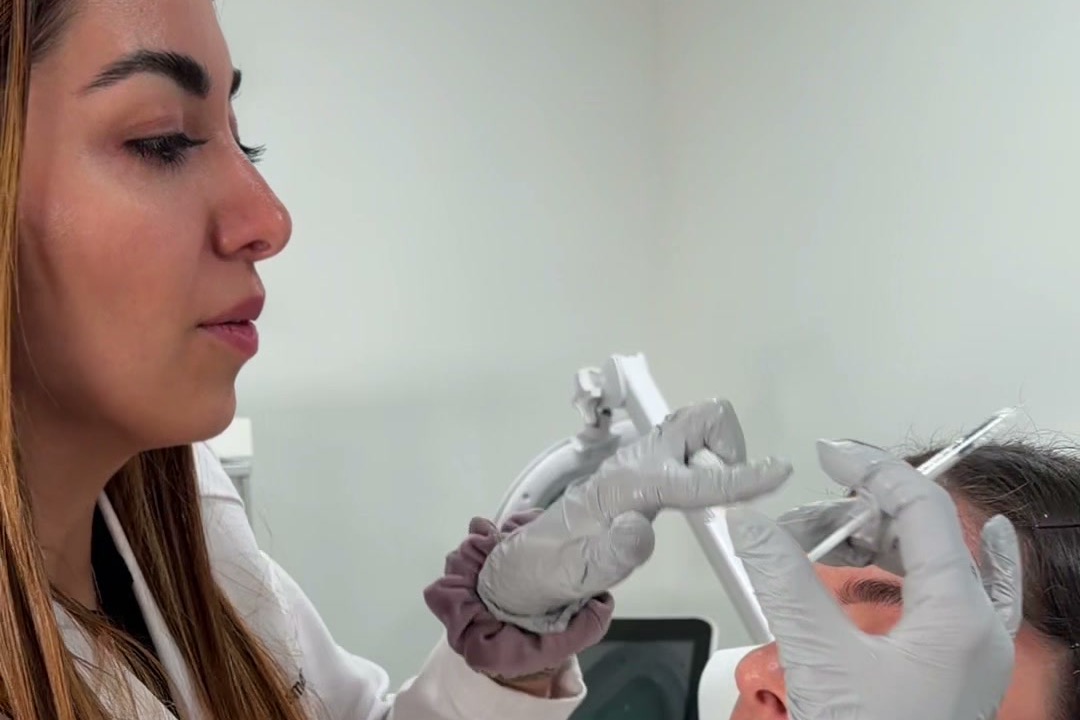
At ROW 89, Botox, Dysport and Xeomin are performed by Rocio Romero, PA-C, our board-certified physician assistant and Practice Director. Treatment is priced at the consult, based on the product, areas and amount.
- New Patient Consult with Rocio Romero, PA-C (45 min, $150, credited toward a treatment or product purchase). Book the consult.
- Learn more about Botox, Dysport and Xeomin, or see all injectables.
- Exosome treatments: call (212) 722-1959 or message us on WhatsApp.
We're at 219A East 89th Street, between Second and Third Avenues, open 10am–8pm daily, with medical aesthetics on the second floor. For neighbors in Yorkville and Carnegie Hill, we're about five minutes from the 86th Street Q station and ten from the 86th Street 4/5/6. Results vary, and every plan starts with an honest conversation about how much movement you want to keep.
Sources
- NPR: What's the deal with preventative "baby Botox"? (Nov. 17, 2025)
- ASPS: 2025 Procedural Statistics Report release (Sept. 1, 2026)
- ASPS: 2024 Procedural Statistics release (June 25, 2025)
- PureWow: Botox Be Damned: "Strategic Wrinkles" Are Now Trending (Aug. 12, 2026)
- Cosmopolitan: Notox Is the Latest Skincare Trend to Take Over Social Media (Sept. 3, 2024)
- DailyMed (NIH): Botox Cosmetic label and Medication Guide
- DailyMed (NIH): Dysport prescribing information
- DailyMed (NIH): Xeomin prescribing information
- American Academy of Dermatology: Botulinum toxin therapy FAQs
- Kaufman-Janette J, et al. Botulinum Toxin Type A for Glabellar Frown Lines: What Impact of Higher Doses on Outcomes? Toxins, 2021
- FDA: Counterfeit Version of Botox Found in Multiple States (2024)
- FDA: Public Safety Notification on Exosome Products