Is Your Radiator Ruining Your Skin? A Winter Barrier-Repair Guide for Upper East Side Apartments
ROW 89 Team • October 22, 2026 • 7 min read
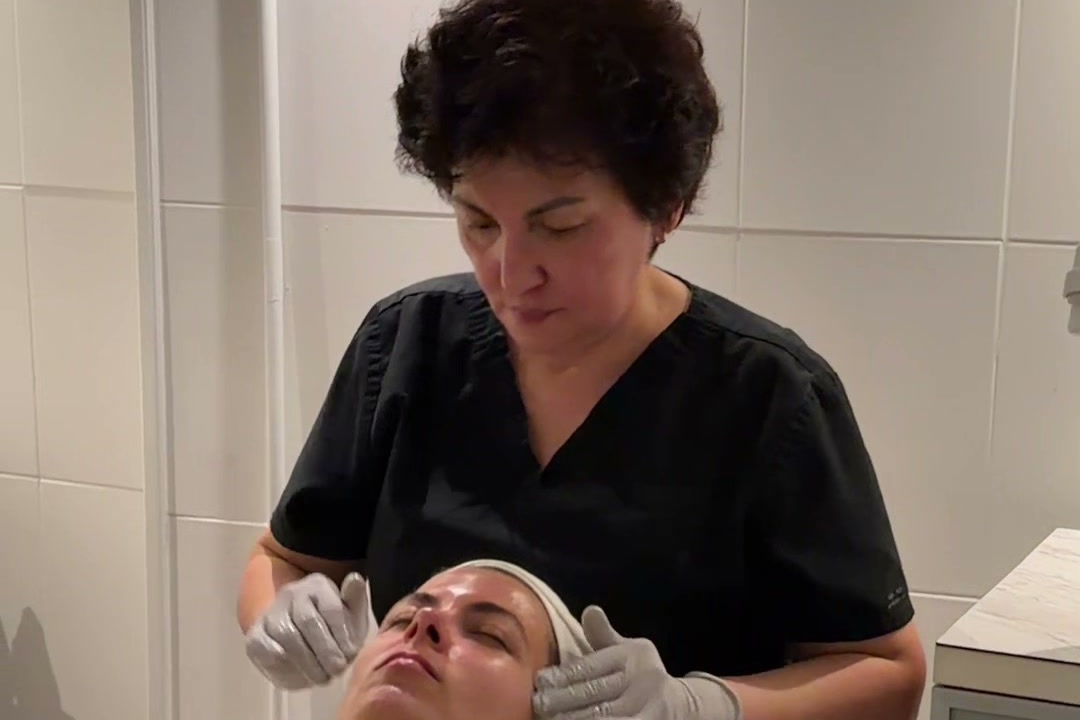
The radiator in Claire's prewar Yorkville apartment has a personality. It clanks to life around midnight, hisses until dawn, and by morning the bedroom air feels baked dry.
Last December, the week of the biggest presentation of her year, Claire woke up with cheeks so tight they ached when she smiled. Her usual moisturizer stung going on.
So she did what so many of us do. She added more. A hydrating toner, then an essence, a vitamin C serum, a richer night cream, and her retinol on top, hoping to smooth the flaky patches before Thursday.
By Wednesday night her skin felt rougher and redder than when she started, and even splashing water on it stung. She remembers standing at the bathroom mirror, concealer in hand, feeling frustrated and a little embarrassed. She had tried so hard to do everything right.
What she learned that winter wasn't a secret product. It was that her skin needed less, not more, and that the dry heat in her apartment was part of the story. Instead of buying another bottle, she decided to stop guessing and ask for advice.
Claire is a composite of clients we hear from often; names and details are changed.
If any of that sounds familiar, you're not alone. New York City's heat season began on October 1, and across the Upper East Side the radiators are hissing again. For many of us, that means warm, dry rooms and skin that feels tight by mid-afternoon.
The timing is tricky for anyone deep into a multi-step routine. On October 8, CNN reported that dermatologists are warning about layered "glass skin" routines, and that using too many products can lead to irritation. Dry radiator air plus a crowded bathroom shelf is a lot to ask of your skin. Here's a gentler plan for the months ahead.
This article is general information, not medical advice. If your skin is cracked, bleeding or painful, or you have a rash that isn't getting better, please see a board-certified dermatologist or your doctor.
What that hissing radiator is doing to your skin
Under NYC's heat rules, building owners must provide heat from October 1 through May 31. From 6 a.m. to 10 p.m., when it's below 55°F outside, indoor temperatures must be at least 68°F. Overnight, from 10 p.m. to 6 a.m., they must be at least 62°F, whatever the weather.
That's welcome on a frigid January night. It also means eight months of heated indoor air.
And dry air is thirsty. As Cleveland Clinic explains, "When the humidity's low, the air draws water from the top layers of our skin."
You may not be able to turn your radiator down. But you can control the air in your bedroom, the length of your shower and what goes on your face.
Tight, stinging, flaky? Signs your skin barrier needs a break
Picture your skin barrier as a brick wall. Cleveland Clinic describes skin cells as the bricks and lipids (fats) as the mortar between them. This outer layer works to keep water in and to keep chemicals and bacteria out.
Signs it's wearing down, drawn from Cleveland Clinic and the dermatologists CNN interviewed:
- Tightness or a dry, uncomfortable feel
- Stinging, especially when you apply skin care products
- Flaking, scaling or rough patches
- Redness or inflammation, or skin that looks darker than usual
- Itching, tenderness or new sensitivity
Cleveland Clinic lists harsh soaps, over-exfoliating or scrubbing, and skipping moisturizer among the everyday habits that can wear the barrier down. Months of dry radiator air don't help.
The "glass skin" trap: why more products can make it worse
The CNN story centered on research presented September 29 at the European Academy of Dermatology and Venereology (EADV) Congress. The researchers assessed 38 viral videos on the trend. Only one mentioned irritation risk, and none was made by a dermatologist.
New York City dermatologist Dr. Jane Yoo told CNN that among her patients who use too many products, she sees contact dermatitis, rosacea and acne flares. Her usual advice is four steps: a simple cleanser, one active ingredient, a moisturizer and SPF.
Korean skin care itself isn't the villain; the experts CNN spoke with agreed on that. The trouble is stacking product after product, often several actives at once, without asking what your skin can tolerate. It's the same trap Claire fell into: when skin feels off, adding something new feels like the fix.
As dermatologist Dr. Mona Gohara put it: "Add one product at a time, start slowly."
A barrier-repair routine that asks you to do less
These steps come from the American Academy of Dermatology (AAD), Cleveland Clinic and the dermatologists quoted by CNN.
- Run a humidifier. Aim for indoor humidity between 30% and 50%. Cleveland Clinic suggests the bedroom, since that's where we spend so many hours. Too much humidity can encourage mold, so stay at or under 50% and clean the tank and filter often.
- Keep showers short and lukewarm. Five to 10 minutes is plenty. Hot water strips away the natural oils your skin relies on.
- Choose a gentle cleanser. Pick a fragrance-free, non-soap formula and skip the scrubbing.
- Moisturize while skin is still damp. Cleveland Clinic suggests getting moisturizer on within about three minutes of washing. Look for ceramides, glycerin and hyaluronic acid. AAD notes that creams and ointments are more effective than lotions.
- Pause exfoliants and retinoids while you're irritated. Dr. Gohara recommends pausing scrubs, exfoliating acids and retinoids while skin recovers, and AAD notes that exfoliating while using retinoids may worsen dry skin. If a retinoid was prescribed for you, check with your prescriber before stopping it.
- Keep up the sunscreen, even in winter. AAD points out that the sun emits UV rays year-round and that up to 80% can get through clouds. Use broad-spectrum SPF 30 or higher on exposed skin, whether you're commuting or taking a cold, bright walk through Carl Schurz Park.
- Simplify, then rebuild slowly. Pare back to cleanser, moisturizer and sunscreen until your skin settles, then reintroduce other products one at a time. AAD advises stopping any product that stings, burns or tingles.
When dry skin is more than dry skin
Home care goes a long way for ordinary winter dryness. But some signs mean it's time for a medical visit. See a board-certified dermatologist if:
- Your dryness gets worse and becomes painful, cracked, bleeding or stinging, as AAD advises.
- You have a rash that isn't improving, or signs of infection such as pus, yellow or golden crusts, swelling, warmth or pain.
- You have eczema (atopic dermatitis), psoriasis or rosacea and it's flaring. Cleveland Clinic links these conditions to a weaker skin barrier and recommends working with a dermatologist.
- Your skin is still dry after you've tried the steps above. AAD notes that dry skin can sometimes point to an underlying medical condition.
A facial is not a treatment for any of these. If your skin is broken or flaring, see a doctor first and save the facial for later.
Why the peel can wait, and where a facial fits
Once your skin is intact and the stinging has settled, a professional facial can complement your routine at home. At ROW 89, two options focus on hydration: the Ultra-Hydrating Glow Facial (80 minutes, $148) and the Hydradermie facial (60 minutes, $139). Results vary, and no facial replaces gentle daily care. Compare all of our options on the facials page.
When you book, mention any retinoids, exfoliating acids or stinging, so your provider has the full picture.
Chemical peels are a different story. A peel is a form of exfoliation, and AAD's exfoliation guidance warns that over-exfoliating can leave skin red and irritated, and says never to exfoliate broken or sunburned skin. Even the lightest "refreshing" peel can leave skin red, followed by scaling that may last 3 to 7 days, according to AAD. That's why we suggest waiting until your barrier has recovered.
When your skin is calm again, take a look at our chemical peels: the Express Peel ($89), Glycolic Peel 50% ($109) and ASA Peel ($139).
Curious about exosomes? What's actually known
ROW 89 also offers exosome treatments. Seen them on your feed? Ask Rocio Romero, PA-C, our Practice Director, about them at a consult.
Here's the honest context. Exosome products are not FDA-approved; the FDA has stated that none are. And the evidence is still emerging: a 2025 review in the Journal of Cosmetic Dermatology found that clinical studies are limited and larger trials are still needed. We won't make promises about what they'll do, but Rocio can walk you through what is and isn't known.
There's no online booking for exosome treatments yet. Call (212) 722-1959 or message us on WhatsApp to ask, or book a New Patient Consult.
Book at ROW 89
ROW 89 is at 219A East 89th Street, between Second and Third Avenues, about 5 minutes from the 86th Street Q station and about 10 minutes from the 86th Street 4/5/6. Facials are on the second floor, and we're open 10am–8pm daily, within easy reach of Carnegie Hill and Lenox Hill.
- Ultra-Hydrating Glow Facial, 80 min, $148: book online
- Hydradermie facial, 60 min, $139: book online
- Express Peel, $89, once your skin is calm: see chemical peels
- New Patient Consult with Rocio Romero, PA-C, 45 min, $150, credited toward a treatment or product purchase: book online
- Exosome treatments: call (212) 722-1959 or WhatsApp us to ask
Browse every service on the full online menu. Not sure where to start? Tell us how your skin has felt since the heat came on, and we'll help you choose.
Sources
- CNN: Trying to achieve 'glass skin'? The Korean beauty skincare routine may be doing too much (October 8, 2026)
- NYC Department of Housing Preservation and Development: Heat and Hot Water Information
- Cleveland Clinic: Dry Air Can Negatively Impact Your Health
- Cleveland Clinic: How To Tell if Your Skin Barrier Is Damaged and What To Do About It
- Cleveland Clinic: How To Prevent Dry Skin This Winter
- Cleveland Clinic: 4 Ways a Humidifier Can Improve Your Health
- American Academy of Dermatology: Dermatologists' top tips for relieving dry skin
- American Academy of Dermatology: How to pick the right moisturizer for your skin
- American Academy of Dermatology: How to safely exfoliate at home
- American Academy of Dermatology: How to maximize results from anti-aging skin care products
- American Academy of Dermatology: Sunscreen FAQs
- American Academy of Dermatology: Signs your rash needs medical attention
- American Academy of Dermatology: Chemical peels FAQs
- U.S. Food and Drug Administration: Public Safety Notification on Exosome Products
- Journal of Cosmetic Dermatology (PMC): Exosomes for Aesthetic Dermatology: A Comprehensive Literature Review and Update (2025)