The Gel Manicure Mistake Dermatologists Keep Seeing (Hint: It Happens at Home)
Anna Feliciano • October 22, 2026 • 8 min read
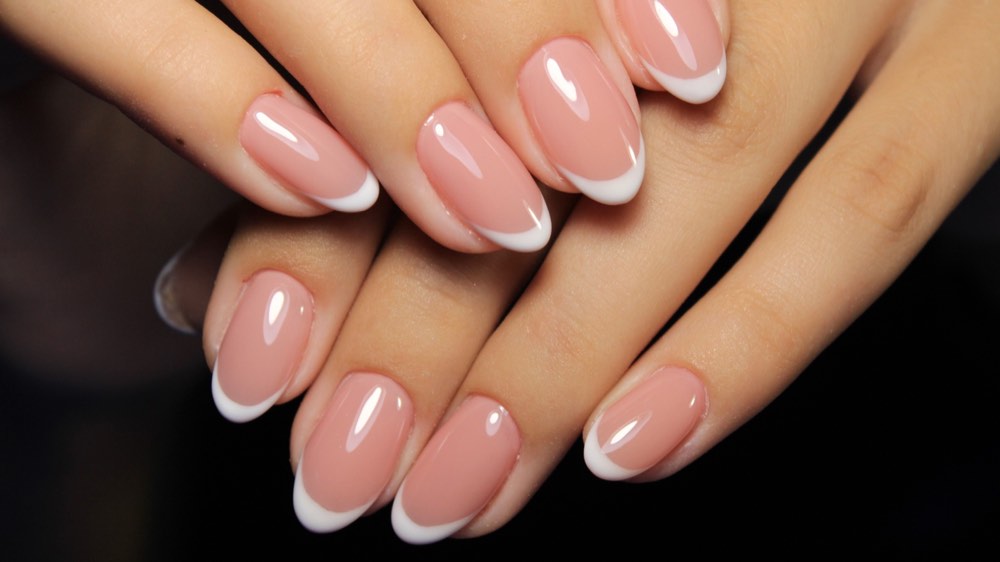
It was almost 11 on a Tuesday night in Yorkville, and Dana finally had the kitchen table to herself. The kids were asleep, tomorrow's lunches were packed, and the little gel kit she'd ordered online glowed violet next to a mug of cold chamomile. Between school pickup, a full workday and an 8 a.m. call, a salon appointment had felt impossible. Doing her own gel manicure felt like winning back a small piece of her week.
The first set looked great. By the third, she was rushing: a few strokes slid onto her cuticles, and she was never quite sure the lamp had finished its job.
Then the itching started. First around her fingertips, then, strangely, on her eyelids. She blamed a new eye cream, then the radiator heat, then stress. The morning she caught her reflection before a big meeting, red and puffy, she felt embarrassed and honestly a little scared.
So she booked a dermatologist. In the waiting room, she learned for the first time that the kit on her kitchen table and the itch on her eyelids might be connected. Mostly, she wished someone had told her sooner.
Dana is a composite of the busy women we hear from often; names and details are changed.
I'm Anna Feliciano, Lead Nail Technician at ROW 89 on the Upper East Side, and I understand the appeal of an at-home gel kit. It's affordable, it's there at 11 p.m., and the shine is real.
But dermatologists keep raising the same concern about gel done at home, and a 2026 case report put it back in the spotlight. Here's what the research says about HEMA, UV and LED lamps, and how to keep your gel manicure safe.
This article is general information, not medical advice. I'm a nail technician, not a doctor. If you have a rash, swelling or blisters around your nails, eyelids or face, please see a board-certified dermatologist.
The 2026 case report that started with a single at-home gel manicure
In June 2026, a dermatology team in Sydney, Australia, published a case in the International Journal of Women's Dermatology. A 46-year-old woman painted a new UV gel polish onto her fingernails and cured it under a lamp. Both came in a do-it-yourself kit from a major retailer.
About six hours later, the skin around her nails began to burn, so she removed the polish. By the next morning she had an intensely itchy rash of bumps and small blisters on her hands, lips, face and neck. The gel contained hydroxypropyl methacrylate (HPMA), and her doctors proposed a diagnosis of methacrylate allergic contact dermatitis. She declined patch testing because of the cost, so the diagnosis rested on the timing and the product's ingredients. She improved with treatment.
What stood out to me as a nail tech was the authors' explanation: incomplete UV curing "can leave residual monomers, which can penetrate the skin" and set off an allergic reaction. At-home kits, they write, "may lack adequate UV curing." They call for more consumer awareness, especially for people whose skin barrier is already weakened. This woman had a history of hand eczema.
One case can't tell us how common this is. But it fits a pattern dermatologists have been describing for years.
HEMA, explained: why the trouble starts before the gel hardens
Gel polish, gel nails and acrylics are built from chemicals called (meth)acrylates. HEMA (2-hydroxyethyl methacrylate) and its cousin HPMA are the names you'll see most in allergy research. In the bottle they're liquid building blocks; under the right lamp they link together and harden into that glossy finish.
The British Association of Dermatologists (BAD) explains that sensitization can happen when uncured product touches any part of the skin. It calls this "very likely" when people apply a product themselves or when a nail technician hasn't had enough training, and it warns that gel that isn't cured sufficiently can raise the risk of developing an allergy.
In a 2017 audit of 4,931 patients tested at 13 UK and Irish dermatology units, 2.4% reacted to at least one (meth)acrylate; 93% of those affected were women.
Here's the part I wish everyone knew: an acrylate allergy doesn't stay at the nail table. The BAD warns it "can have lifelong consequences for dental treatments and surgeries." Its 2023 update notes that the same or very similar methacrylates are used in white dental fillings, enamel tooth coatings, orthopedic bone cement, and diabetic glucose sensors and insulin pumps. And because HEMA strongly cross-reacts with related chemicals such as HPMA, according to a 2024 clinical review, a reaction to one product can mean reacting to others.
Why your eyelids might react to your manicure
You'd expect trouble on your fingertips, and the case report authors do describe the skin around the nails and fingertips as the most typical spot. But the BAD notes a red, itchy rash can appear "anywhere on the body that has come into contact with the nails, including the eyelids, face, neck." Think about how often you rub your eyes or rest your chin in your hand.
The American Academy of Dermatology (AAD) notes that thin eyelid skin is a common place for contact dermatitis. Signs to watch for include:
- Itching, often intense, sometimes with burning or stinging before a rash appears
- Redness and swelling around the nails, on the fingertips, or on the eyelids or face
- Small fluid-filled blisters, or dry skin that cracks
- Nails loosening from the nail bed, which the BAD also lists
Reactions can be delayed. The AAD notes an allergic reaction "can take time to appear," and the woman in the case report didn't break out until the next day.
UV and LED nail lamps: what the DNA study did (and didn't) show
The other big gel question is the lamp. In 2023, researchers at UC San Diego published a study in Nature Communications (Zhivagui and colleagues) that exposed human and mouse cells in lab dishes to a UV nail polish dryer. A single 20-minute session killed 20% to 30% of the cells, and three 20-minute sessions killed 65% to 70%. Surviving cells showed DNA damage and mutations.
The authors believe this points to a possible skin cancer risk, and that deserves attention. But read their caveats too. Cells in a dish lack the skin's protective outer layer, and the authors write that their work "does not provide direct evidence for an increased cancer risk in human beings." Large studies in people are still needed and will likely take at least a decade. They also note that hands are usually under the lamp for up to 10 minutes per session, not 20.
For context, the Skin Cancer Foundation says both UV and LED nail lamps mainly emit UVA, and that even the most intense devices present "only a moderate UV risk — a far lower risk than that presented by UV tanning devices." Simple precautions help:
- Sunscreen first. The AAD recommends a broad-spectrum, water-resistant sunscreen with SPF 30 or higher on your hands before a gel manicure. The Skin Cancer Foundation suggests applying it about 20 minutes ahead.
- Or fingerless gloves. The AAD suggests dark, opaque gloves with the fingertips snipped off, so only your nails are exposed.
Your gel manicure safety checklist (rule one: don't peel it)
- Notice the signs. Itching, redness or swelling around your nails, or on your eyelids or face, after a gel manicure deserves attention, even if it shows up a day later.
- Stop and see a dermatologist. Don't reapply "to see if it happens again." A dermatologist can do patch testing: small patches on your back, checked over about a week, to find the cause. The BAD recommends routine (meth)acrylate testing, and a 2019 review in Cutis notes that once you know, avoidance is key.
- Don't peel or pick off gel. The AAD warns that picking or filing off gel polish "can significantly damage your nails". Have it soaked off properly instead.
- Take a break if your nails look thin. The AAD says gel manicures can lead to brittleness, peeling and cracking, and suggests going without polish for one to two weeks or longer. It also recommends a moisturizer such as petroleum jelly on nails and cuticles several times a day; between appointments, I like a daily cuticle oil, too.
- Tell your nail tech about past reactions. Any itching, rash or lifting after gel, acrylics, dip powder or lash glue matters; it can change whether gel is right for you at all. If a dermatologist confirms an acrylate allergy, ask them which products are safe for you; the Cutis review recommends acrylate-free polishes as alternatives.
- If you DIY, follow the kit exactly. The BAD advises using the UV lamp recommended for the product, not pairing it with polishes bought separately, and keeping the product off your skin while it cures.
Why a salon gel manicure is a different risk than a kitchen-table one
None of this means gel is dangerous for everyone. It means technique matters. As general professional practice, a trained nail technician applies thin, controlled layers; keeps gel off the cuticles and surrounding skin; cleans up any product that touches skin before it's cured; cures each layer for the full time with a lamp matched to the product; and soaks gel off rather than prying or scraping it.
A salon doesn't erase the risk: the BAD notes risk also rises when a technician isn't properly trained. But careful application and full curing remove much of the guesswork that comes with a rushed manicure at 11 p.m. If you're in Carnegie Hill and short on time, a 45-minute gel appointment may be easier to fit in than you think.
Book a gel manicure (or a gel break) at ROW 89 on the Upper East Side
Our nail bar is on the 1st floor at 219A East 89th Street, between Second and Third Avenues, about five minutes from the 86th Street Q station and ten from the 86th Street 4/5/6. We're open 10am–8pm daily.
- Color gel manicure (45 min, $49). Book a color gel manicure.
- Regular manicure (35 min, $22). Tidy nails during a gel break.
- Color gel polish removal ($10). So you never have to peel.
- ANC powder gel manicure (90 min, $61).
See every option on our manicure and pedicure page or the full Booker menu, or call (212) 722-1959. If you've ever reacted to gel, acrylics, dip powder or lash glue, please check with your dermatologist first and tell us before your appointment. I'd always rather we talk it through.
Sources
- Syed A, Tan B, Murrell DF. Glossed over: the increasing importance of ultraviolet-cured gel nail polish in allergic contact dermatitis. Int J Womens Dermatol, 2026 (PMC); also on PubMed
- British Association of Dermatologists: Dermatologists issue warning about UK artificial nail allergy epidemic (2018)
- British Association of Dermatologists: Dermatologists reiterate artificial nails warning and risk of at-home kits (2023)
- de Groot AC, Rustemeyer T. 2-Hydroxyethyl methacrylate (HEMA): a clinical review of contact allergy and allergic contact dermatitis, Part 2. Contact Dermatitis, 2024 (PubMed)
- Atwater AR, Reeder M. Trends in nail services may cause dermatitis: not your mother's nail polish. Cutis, 2019 (PubMed)
- American Academy of Dermatology: Contact dermatitis signs and symptoms
- American Academy of Dermatology: Patch testing can find what's causing your rash
- Zhivagui M, et al. DNA damage and somatic mutations in mammalian cells after irradiation with a nail polish dryer. Nat Commun, 2023 (PMC)
- Skin Cancer Foundation: Ask the Expert: Are the UV lamps in the dryers at the nail salon safe to use?
- American Academy of Dermatology: Gel manicures: Tips for healthy nails
- American Academy of Dermatology: Dermatologist's secret for removing gel nail polish at home